Liam Mizrahi
← All work
2025

Bringing AI Into a Legacy Product at Morning

How I pushed to integrate AI into Morning's Sales Pages product, going from a POC to production in 3 weeks, and why I think it was the right call.
Bringing AI Into a Legacy Product at Morning
Morning is the largest business management system in Israel. One of its products is called Sales Pages, basically a tool that lets business owners create landing pages or simple online stores. Think of it as a lighter version of Shopify or Wix ecommerce. You pick a template, customize blocks, connect a payment method, add products, and you're live. The product was built a few years ago and honestly, it worked. It had real customers using it. But it hadn't been touched in a long time, and it started to show. At some point, the company decided to bring it back to life. Our team was responsible for planning improvements and making it more modern. So we started working on it, fixing things, upgrading the UI, cleaning up old code. While we were making these small improvements, something kept bothering me. We're in 2025. There's Lovable, Base44, and a dozen other tools that let anyone, even people with zero technical background, generate full pages with AI in seconds. If that's the world we live in now, why would someone go through the effort of picking a template, writing all the content from scratch, setting up every block manually? I started asking myself: does this product even have a future if we just polish the existing experience? I brought the idea to the team. What if instead of the user building everything manually, they just describe what they want in a short prompt, and the system generates the full page for them? Content, design, images, products, everything. The first reaction was something like "yeah, that's a cool idea for the future." Not a no, but not really a yes either. I kept pushing. I thought this wasn't a nice-to-have, it was the thing that could actually make this product relevant again. Eventually, they agreed to let me do a quick POC. I built it fast and showed the team that it works and it's not that complicated. After that, the green light came. We shipped it to production in about 3 weeks. We didn't build an autonomous agent. It's a predefined workflow with clear steps, each one handling a specific part of the generation. Step 1: Guardrail Before anything runs, there's a gatekeeper that checks the prompt. Is it valid? Does it meet our content policy? If not, it stops and gives the user a clear reason why. This keeps things safe without needing manual moderation. Step 2: Planning The system picks the best theme and layout for what the user described. It considers the use case, target audience, tone, and even pulls context from the business profile already in the system. This step makes sure the output actually fits the user, not just a generic template. Step 3: Content Generation This is the main step. The LLM receives a minimal schema (which blocks exist, what fields they have) and generates the actual content. We intentionally keep the schema small so the model stays focused and fast. It picks which blocks to use and what to put in them based on everything it knows from the previous steps. It also searches for fitting images using Unsplash through a tool call. The model generates a search query, gets results back, and picks the best match. This makes the pages look surprisingly real and ready to publish. Step 4: Product Creation If the page is a store, the system also generates products. If the user mentioned specific ones, it goes with that. If not, it figures out the most fitting products for the business, with realistic pricing based on what's common in that market. Again, it works from a minimal schema so the output maps cleanly into the system.
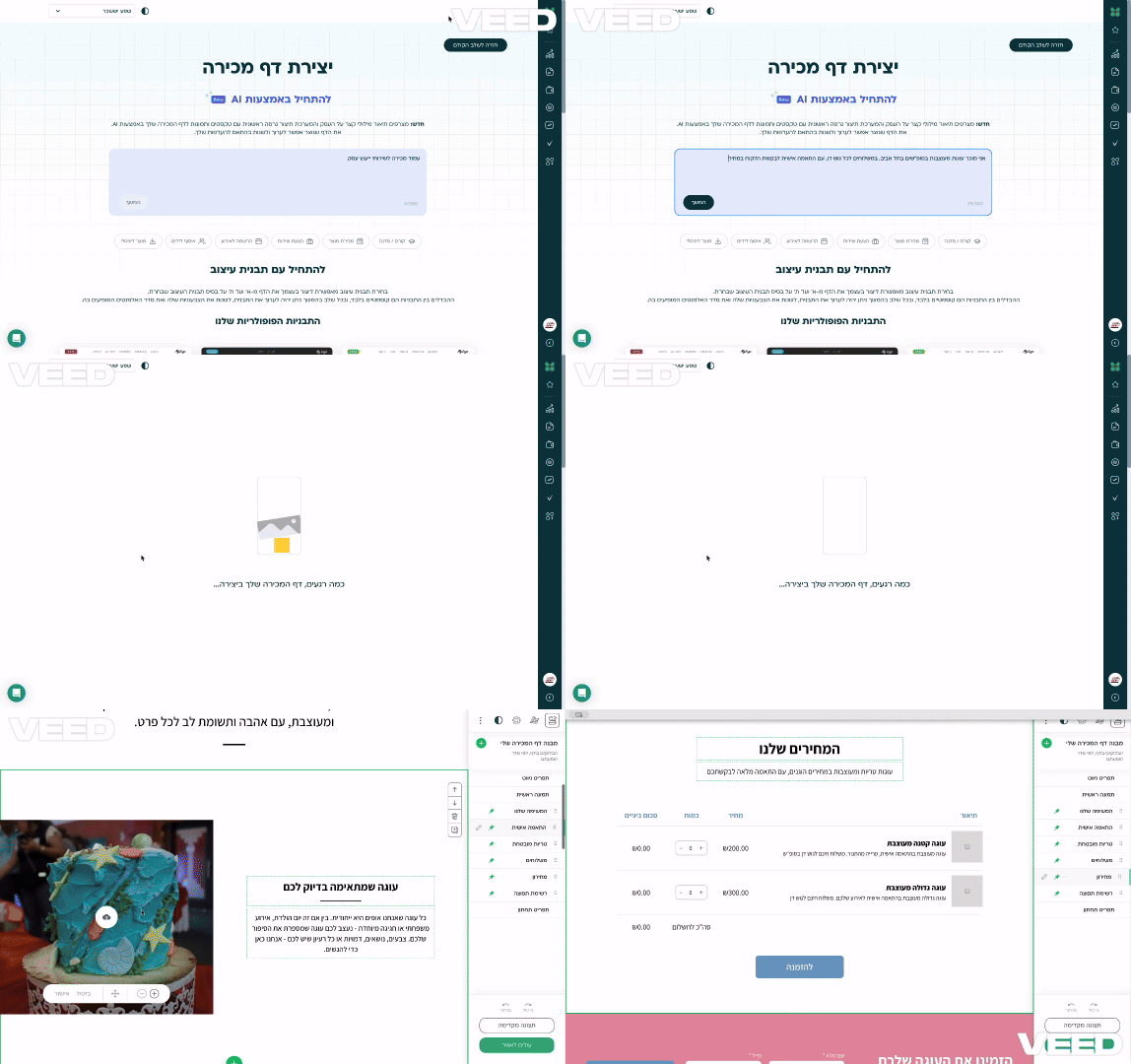
The generation flow in action
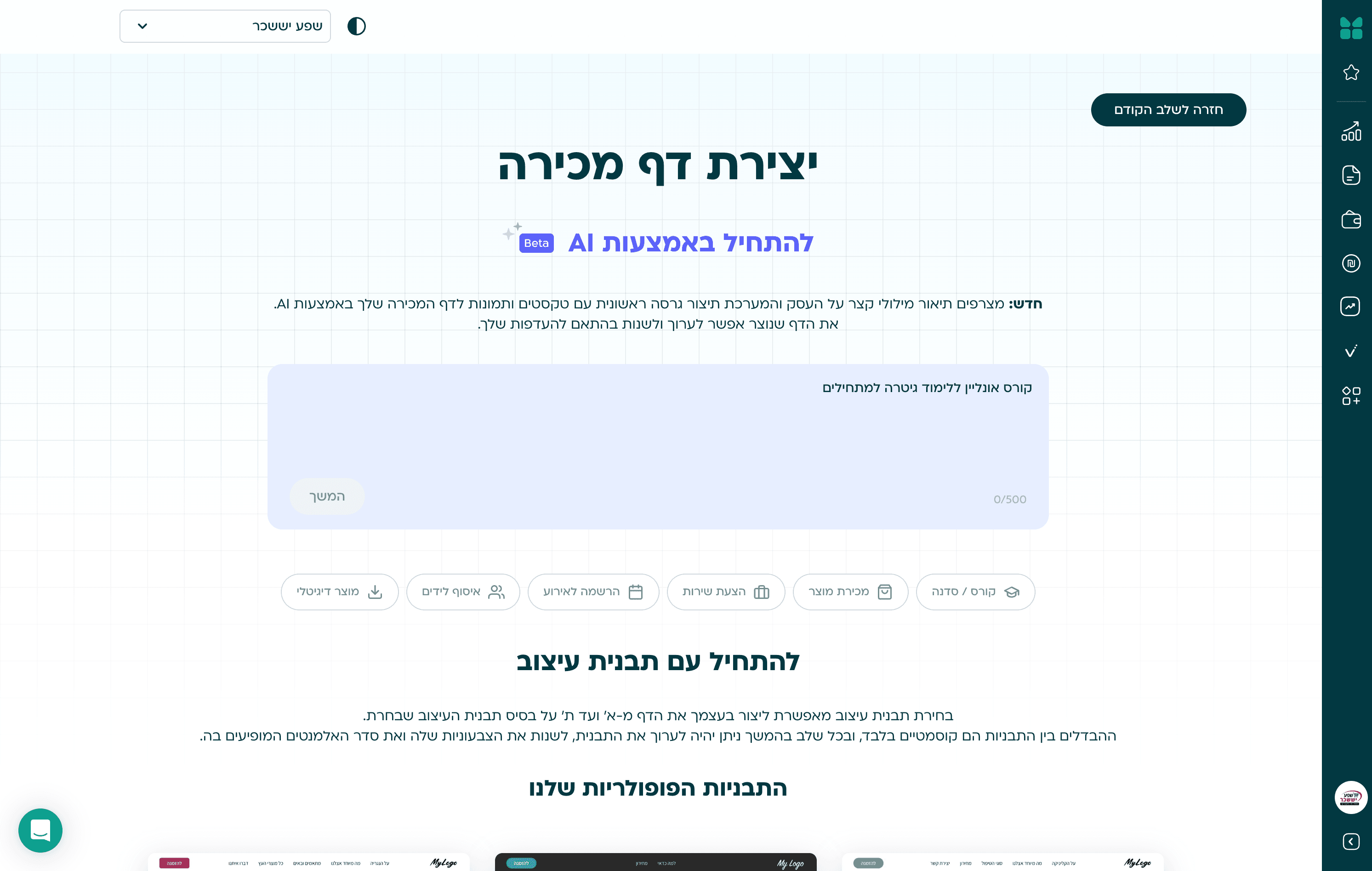
We built a completely new UI for the generation flow, similar to what you see in Lovable or Base44. The user types a prompt, waits a few seconds, and gets a full page with everything set up. The output was honestly better than I expected. Pages came out looking like someone spent real time designing them, with relevant content, good images, and products that made sense. For a product that was almost forgotten, this felt like the right move. The technical part was fun, but the bigger takeaway for me was about pushing for ideas you believe in. The initial response wasn't enthusiastic, and I get it, AI features can sound like hype. But sometimes the best thing you can do is just build a quick proof and show that it works. Not every product needs a full AI agent. Sometimes a well-structured workflow with clear steps does the job better, faster, and more predictably. We kept it simple and it paid off.